

AI Isn’t Replacing Scientists. It’s Shifting the Bottleneck
AI accelerates expert science, but judgment and scalable verification are the bottlenecks; trust, not speed, governs progress.
AI accelerates expert science, but judgment and scalable verification are the bottlenecks; trust, not speed, governs progress.

Most teams confuse analysis with decisions. But AI can’t commit — only you can. This piece shows how to design the decision before you design the agent, and why that clarity is the key to scaling AI safely.
If you’re scaling AI, this one’s for you.
Clarify the decision, protect the judgment, scale with confidence.
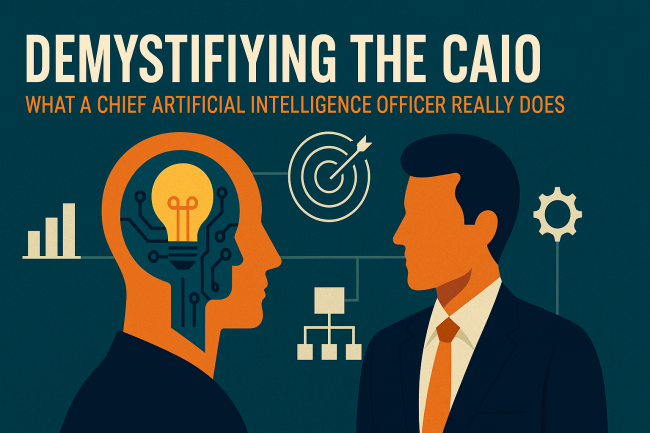
A Chief Artificial Intelligence Officer (CAIO) translates AI ambition into business impact. This guide breaks down the CAIO’s core responsibilities, strategic value, and role within the org. Learn how a CAIO drives alignment, ethics, and enterprise-wide adoption—and why your company might need one sooner than you think.
Artificial Intelligence (AI) has evolved from an experimental capability into a foundational element of modern business strategy. Yet despite increased investment and enthusiasm, many organizations struggle to scale AI effectively and extract measurable value. This gap underscores the need for a strategic executive leader—the Chief Artificial Intelligence Officer. What Is a Chief Artificial Intelligence Officer?…
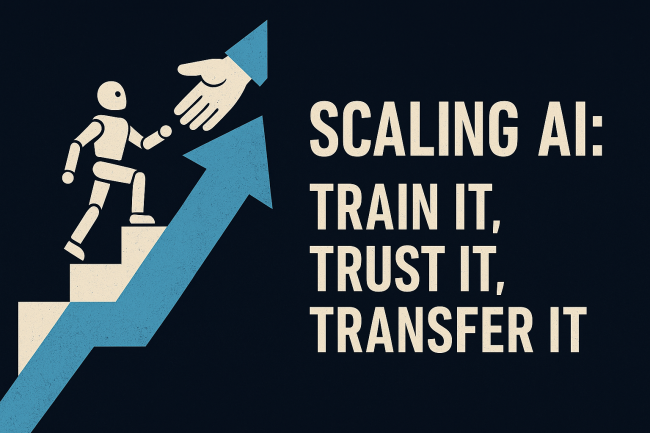
The Chicago AI Mastermind session revealed that scaling AI focuses on mindset rather than just technical execution. Many projects fail in the pilot phase due to insufficient operational foundations. Key themes include continuous training, building trust in tools, and enabling others to use AI systems effectively, transforming AI into an essential business asset. One mantra emerged: Train it. Trust it. Transfer it.
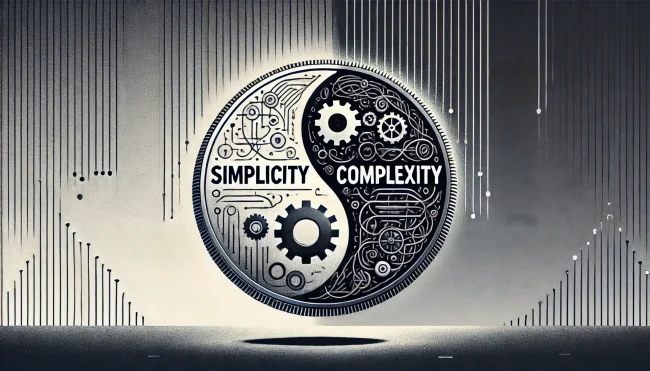
In 2024, advancements in Large Language Models (LLMs) made them more accessible yet complex. Innovations like multimodal inputs and lower costs simplified workflows, while deeper technical knowledge became essential for efficient use. Businesses face challenges due to this paradox, necessitating better AI education to harness LLM potential while mitigating risks.

The landscape of AI is rapidly evolving, and with it, the role of conversational agents is transforming beyond mere query-response interactions. We are entering an era where chatbots and AI agents must not only grasp the subtleties of human language but also engage users in a way that feels natural, personalized, and, most importantly, human.…